Dan Rifkin’s attempted knife attack on the Barber family
Defending JacobDan Rifkin’s attempted knife attack on the Barber family occurs as Andrew Barber, Laurie, and Jacob leave the courthouse after the trial, turning their brief sense of release into a fresh confrontation with the Rifkin family’s grief. Dan brings a kitchen knife, but Father O’Leary intervenes before he can reach the Barbers. The episode ends with Dan walking away and the family learning that O’Leary was there because Andrew’s father had asked him to look out for them.
The approach after the trial
The Barbers have just made their way through a crowd of reporters and run down Thorndike Street to their parked car. They are laughing and celebrating their freedom, and Andrew and Laurie have just thanked Jonathan for his work on the case. Jacob is the first to notice the two men approaching and warns the others. Dan Rifkin comes ahead of Father O’Leary, wearing a tan trench coat whose many buttons and pockets make him conspicuous. His expression gives the Barbers little indication of what he intends.
The family initially reads the encounter through the emotional reversal of the trial’s end: they are puzzled, but pleased at the thought that Dan may have come to welcome them back into ordinary life despite his loss. Laurie calls out to him. That expectation collapses when Dan does not answer and reaches into his coat. The scene’s turn depends on the distance between welcome and threat: the Barbers have just left court as a family cleared of the immediate trial ordeal, yet the conflict has followed them to the garage.
O’Leary intervenes
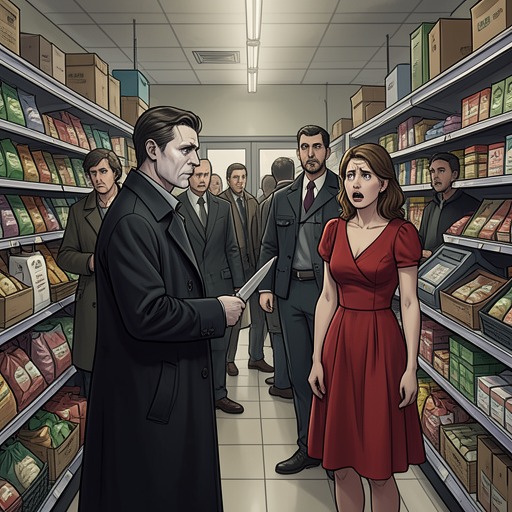
Dan takes out an ordinary kitchen knife. Andrew recognizes it as a Wüsthof Classic steak knife, like those in the knife block on the counter at the Barber family home in Newton. The household resemblance makes the weapon an unsettling intrusion of domestic life into the courthouse aftermath. Andrew has little time to register the recognition before Father O’Leary seizes Dan’s arm, knocks the knife from his hand against the car hood, and restrains him there.
O’Leary’s intervention is swift and controlled, lasting only seconds. The knife falls to the garage floor, and Dan is held bent over the hood rather than allowed to approach the family. When Andrew asks who O’Leary is, he identifies himself as a friend of Andrew’s father, who had asked him to watch over the Barbers. The explanation connects the immediate rescue to a protective relationship rooted beyond the family’s present crisis.
O’Leary asks what Andrew wants done with Dan. Andrew tells him to let Dan go, and O’Leary complies. The exchange matters because the intervention stops the attack without turning into a further confrontation: Andrew’s response is to end Dan’s restraint, not to pursue retaliation.
Aftermath and significance
Once released, Dan straightens up with tears in his eyes. He looks at the Barbers with helplessness; the narration indicates that he apparently still believes Jacob killed his son, though the trial has ended in a result favorable to the family. Dan staggers away. His grief and his belief remain unresolved, even as his attempt to act against the Barbers has been prevented.
Father O’Leary then approaches Jacob, offers his hand, and congratulates him on what happened in court that morning. Jacob shakes it with a bewildered expression. The contrast closes the scene: Dan’s approach shows that a legal outcome has not reconciled the families, while O’Leary’s greeting places Jacob back among people willing to welcome and protect him. The event therefore marks neither a simple return to safety nor a renewed fight. It ends with the immediate danger stopped, Dan departing, and the Barbers confronted with the fact that their life after the trial remains shaped by grief, suspicion, and protection arranged through Andrew’s family ties.